Cultural Day Trip · Ad Dakhiliyah, Oman

Bahla
Heritage Day

Oman’s oldest and largest mud-brick fortification, Bahla is famed for its 12-kilometre oasis wall, pottery workshops and UNESCO-listed fort. A relaxed private heritage day from Nizwa, Al Hamra or Muscat, led by Ali.

  • Half-day to full-day
  • Easy cultural walking
  • Private group · Local guide Ali

Overview — the "Timeless Heritage" of the Hajar foothills

Bahla is one of the oldest towns in Ad Dakhiliyah, sitting in the foothills below the Al Hajar Mountains. Surrounded by palm groves, ancient falaj channels and a string of quiet villages, Bahla carries the weight of thousands of years of continuous settlement — and the **mud-brick ruins** scattered across the oasis are the visible proof. It is the natural companion to a Nizwa day and a perfect second cultural chapter for any Hajar mountains trip.

Three things define Bahla. The Bahla Fort — the country's largest mud-brick fortification, on the UNESCO World Heritage List since 1987 and the first Omani site ever inscribed. The 12-kilometre defensive wall with its seven historic gateways — the most extensive mud-brick enclosure in the Arabian Peninsula. And Bahla's living pottery tradition, where craftsmen still shape, mould and bake clay using techniques that go back roughly 2,500 years. Ali runs the day from any of the launch bases — Nizwa, Al Hamra, Jabal Akhdar, or Muscat.

What to expect on the Bahla Heritage Day

  • Guided walk inside the Bahla Fort — a 12th-to-15th-century mud-brick fortification and Oman's first UNESCO World Heritage Site (1987)
  • Exterior view of the 12-kilometre defensive wall with its seven historic gateways — the largest mud-brick enclosure in the Arabian Peninsula
  • Visit to a Bahla pottery workshop, where craftsmen shape, mould and bake clay the traditional way — and (optionally) take home a piece you watched being made
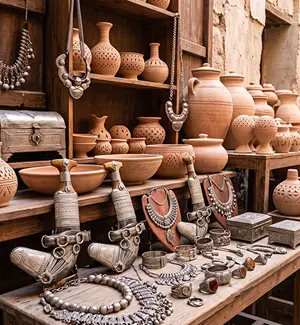
  • A slow browse through the Bahla Souq — pottery, silver jewellery, khanjars, dates and local handicrafts
  • Stop at the adjacent Friday Mosque with its decoratively sculpted mihrab, plus the palm groves and old falaj channels at the foot of the fort
  • Optional side visit to nearby Jabrin Castle — a beautifully decorated 17th-century palace, a calm cultural partner to the Fort

Who the Bahla Heritage Day is for

For travellers who want the heritage chapter behind Oman's mountain scenery. Couples, families, history and craft enthusiasts, photographers and photographers' companions will all find a way in. Bahla pairs naturally with the Nizwa Cultural Capital Day Trip, sits within an hour of Jabal Akhdar and Misfat Al Abriyyin, and is one of the cleanest cultural stops on the way up to the canyon rim. Walking is flat and easy; the pace is yours.

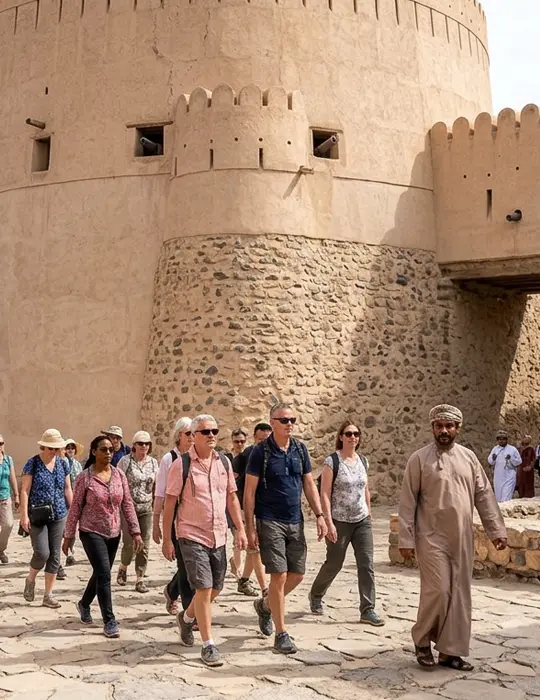
A guided group walking under the round tower of Nizwa Fort in Oman
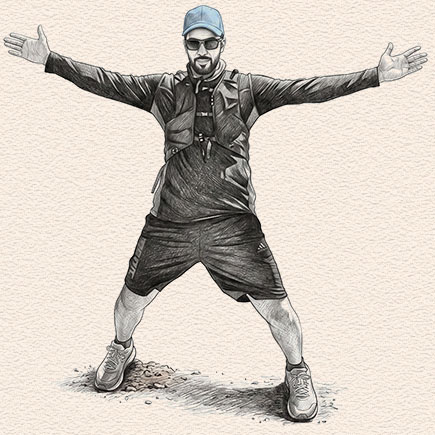
Illustration of Ali welcoming guests with open arms

Spend a day in Bahla with Ali and step into one of Oman's most historic towns — the country's largest mud-brick fort, a 12-kilometre defensive wall, two and a half millennia of pottery, and (optionally) Jabrin Castle right beside it.

Drinks & Snacks upon request

Bahla town has a couple of straightforward local restaurants plus refreshment options in the Souq, but daytime meals are best arranged in advance so the heritage day flows. Tell Ali what you'd like and we arrange it before, during or after the tour.

We can book a sit-down Omani lunch at one of the well-known local restaurants near the fort, schedule a date and coffee stop at a neighbouring plantation, or pack a Souq-day snack basket of fresh juices, sandwiches, fruit, tea and coffee in the car. For guests doing the combined Bahla + Jabrin Castle day, Ali adds a convenient lunch stop between the two sites.

Breakfast is not included by default, but it can be added on request at your Muscat, Nizwa or Al Hamra hotel before pickup. Pricing [TBC].

Bahla Heritage Highlights & Tour Options

Bahla Fort · 12-km wall · Friday Mosque · Pottery workshops · Bahla Souq · Jabrin Castle

Bahla Fort — Oman's first UNESCO-listed site
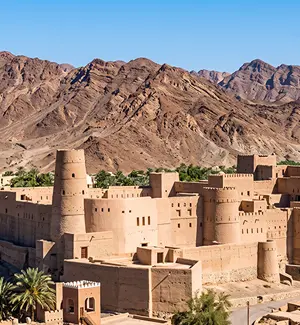
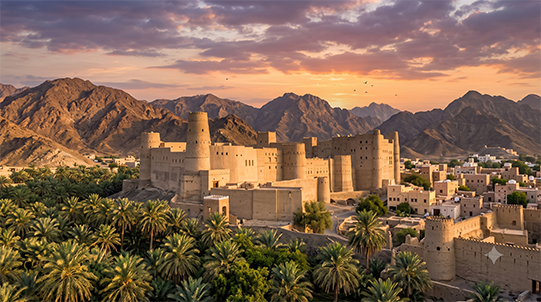
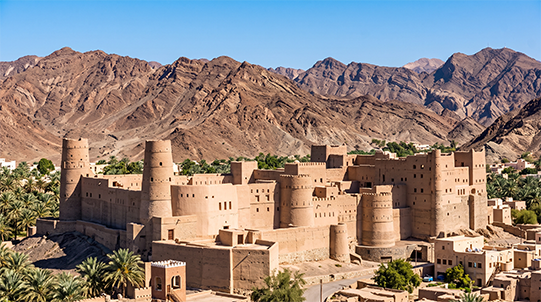
Mud-brick towers of Bahla Fort against the Jebel Akhdar foothills
  1. Pre-Islamic roots, medieval Bahla Nabhani

    The immense, ruined Bahla Fort is built of mud brick on stone foundations. Some sources place an earlier fortification as far back as the 4th–5th century AD, while the structure on site today is widely dated to between the 12th and 15th centuries, when it served as the seat of the Banu Nebhan tribe, the dominant dynasty of the area for several centuries. The archaeological record in the oasis runs much deeper still — around 5,000 years of continuous settlement. Ali walks you through the towers, the deep wells, the rooftop and the ruined rooms that still hint at the site's scale.

  2. Best for

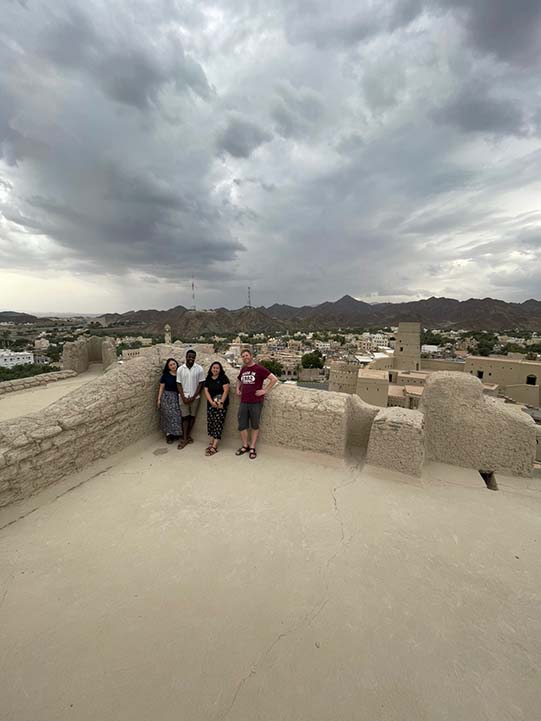
    History lovers, photographers and any first- time Omani visitor. The walking is light and the rooftop view back across the oasis is the signature shot of the day.
The 12-km Defensive Wall — seven gates around the oasis

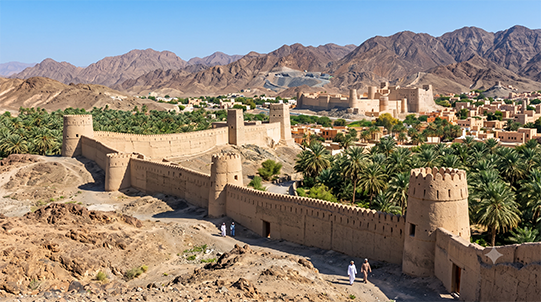
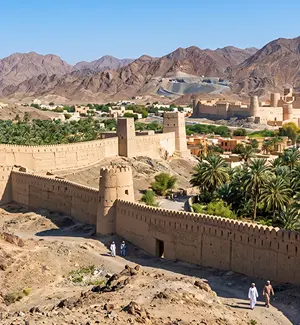
Section of the 12-km mud-brick defensive wall that rings the Bahla oasis
  1. The largest mud-brick enclosure in the Arabian Peninsula

    Surrounding the old town is the Bahla wall — a mud-brick defensive enclosure that runs almost 12 kilometres around the oasis, studded with towers, soldier rooms, barracks and gun positions. The wall is pierced by seven main gates, the most photographed of which is Bab al-Kabir. Even from the car window the scale is striking; Ali stops at the gate that gives the best frame.

  2. Best for

    Travellers who want to understand the fort's strategic context, and anyone interested in medieval defensive architecture. A short outside-the-car walk, fully optional.

Bahla Pottery Workshops — a 2,500-year craft tradition alive today

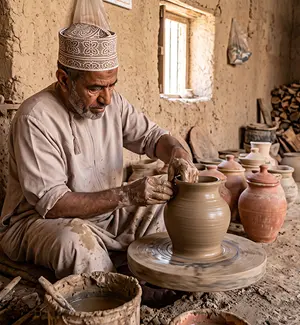
A Bahla potter shaping a clay vessel on the wheel in his workshop
  1. Hands on with a 2,500-year-old craft

    Bahla is one of Oman's best-known centres of traditional pottery. Local craftsmen — including younger potters like Mujahid Al Mufarji who are keeping the tradition alive — shape, mould, paint and bake clay by hand using techniques passed down for roughly 2,500 years. Ali introduces you to a workshop, walks you through the stages of a piece, and (on request) arranges a 90-minute hands-on pottery class led by the artisans themselves.

  2. Best for

    Craft lovers, families with children and anyone who learns better with their hands than through a guidebook. A small, optional extra fee covers the art-class version.

Bahla Souq — pottery, khanjars, silver and spices

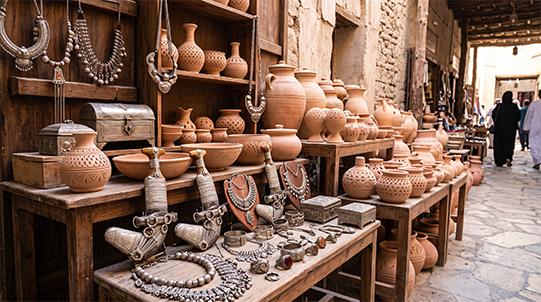
Pottery and silver pieces on display in the Bahla Souq, Oman
  1. Where Bahla is bought to take home

    The Bahla Souq sits between the fort and the wall and is one of the oldest markets in the area — one of the best places in Oman to buy handmade pottery straight from the source, plus silver jewellery, decoration khanjars, coffee pots, spices and textiles. It runs as a working market rather than a tourist souvenir strip, which is part of why it feels so local.

  2. Best for

    Shoppers and food lovers — Bahla pottery in particular makes a much-loved souvenir that can go straight on a kitchen shelf.

Practical Information for visiting Bahla

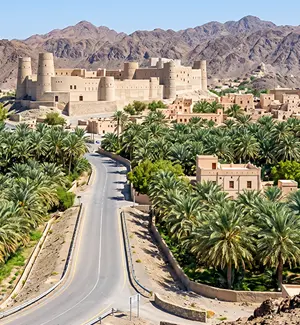
Road leading into Bahla town past date-palm groves in Ad Dakhiliyah
  1. Where & how to get there

    Bahla sits in the Ad Dakhiliyah Governorate, around 40 km / 30 min south of Nizwa and roughly 200 km from Muscat (about a 2.5-hour drive). The road is paved the entire way — a normal saloon car reaches Bahla and the Fort without 4WD. The Bahla Fort itself is widely open Sunday to Thursday, 9:00 AM – 4:00 PM, and on Fridays in two windows (8:00–11:00 AM and 1:30–4:30 PM).

  2. Season, climate & trip combinations

    Bahla works year-round, but the cooler months of October to March are the most comfortable. From Bahla the car can reach Jabrin Castle in about 20 minutes; Jebel Akhdar in under two hours (via the Birkat Al Mouz checkpoint); Misfat Al Abriyyin in under two hours; and the Wadi Muaydin / Birkat Al-Mawz area in around half an hour. Wear modest, breathable clothing for the Fort and Souq, comfortable walking shoes, and bring sun protection in summer.

Frequently Asked Questions.

Bahla Fort was inscribed on the UNESCO World Heritage List in 1987 — making it Oman's first World Heritage site. In 1988 it was also placed on the List of World Heritage in Danger as a conservation priority, and has since undergone extensive restoration. It is the country's largest mud-brick fortification.

The current fortifications date from the 12th to 15th century, when the oasis was the seat of the Banu Nebhan tribe, the dominant local dynasty. Some research points to an earlier fortification on the same site from the 4th–5th century AD; the archaeological record in the Bahla oasis itself runs back roughly 5,000 years of continuous settlement.

The Bahla defensive wall stretches almost 12 kilometres around the oasis — studded with towers, soldier rooms, barracks and gun positions, and pierced by seven main gates (the most photographed being Bab al-Kabir).

Bahla is one of Oman's best-known centres of traditional pottery. Craftsmen still shape, mould and bake clay by hand using techniques that have been passed down for roughly 2,500 years, making the craft one of the oldest living traditions in the area.

The Bahla Souq is one of the best places in Oman to buy handmade pottery direct from the workshop, plus decorative khanjars, coffee pots, silver jewellery, spices, dates and textiles. Prices are realistic and the market still functions as a working local souq.

Bahla sits roughly 40 km south of Nizwa (about a 30-minute drive) and roughly 200 km from Muscat (about a 2.5-hour drive). The road is paved all the way — no 4WD needed to reach the town or the Fort.

Bahla is the natural partner to Nizwa (30 min to the north). Ali can also extend the day to Jabrin Castle (about 20 min further), to Jebel Akhdar under two hours via the Birkat Al Mouz checkpoint, or to Misfat Al Abriyyin. Two nights in Ad Dakhiliyah — one in Nizwa, one on the Saiq Plateau — covers all four.

Yes — the Bahla Heritage Day is a 100% private trip with Ali, run at the pace of your group. Half-day, full-day and Nizwa + Bahla combined day options are all on request.

Send a WhatsApp message or use the booking form on this page with your preferred date, group size and pickup city (Muscat, Nizwa, Al Hamra or Saiq), and whether you'd like Jabrin Castle added, the pottery workshop, or a combined Nizwa + Bahla day. Ali replies the same day with a plan and pricing.

Still have a Question?